
n
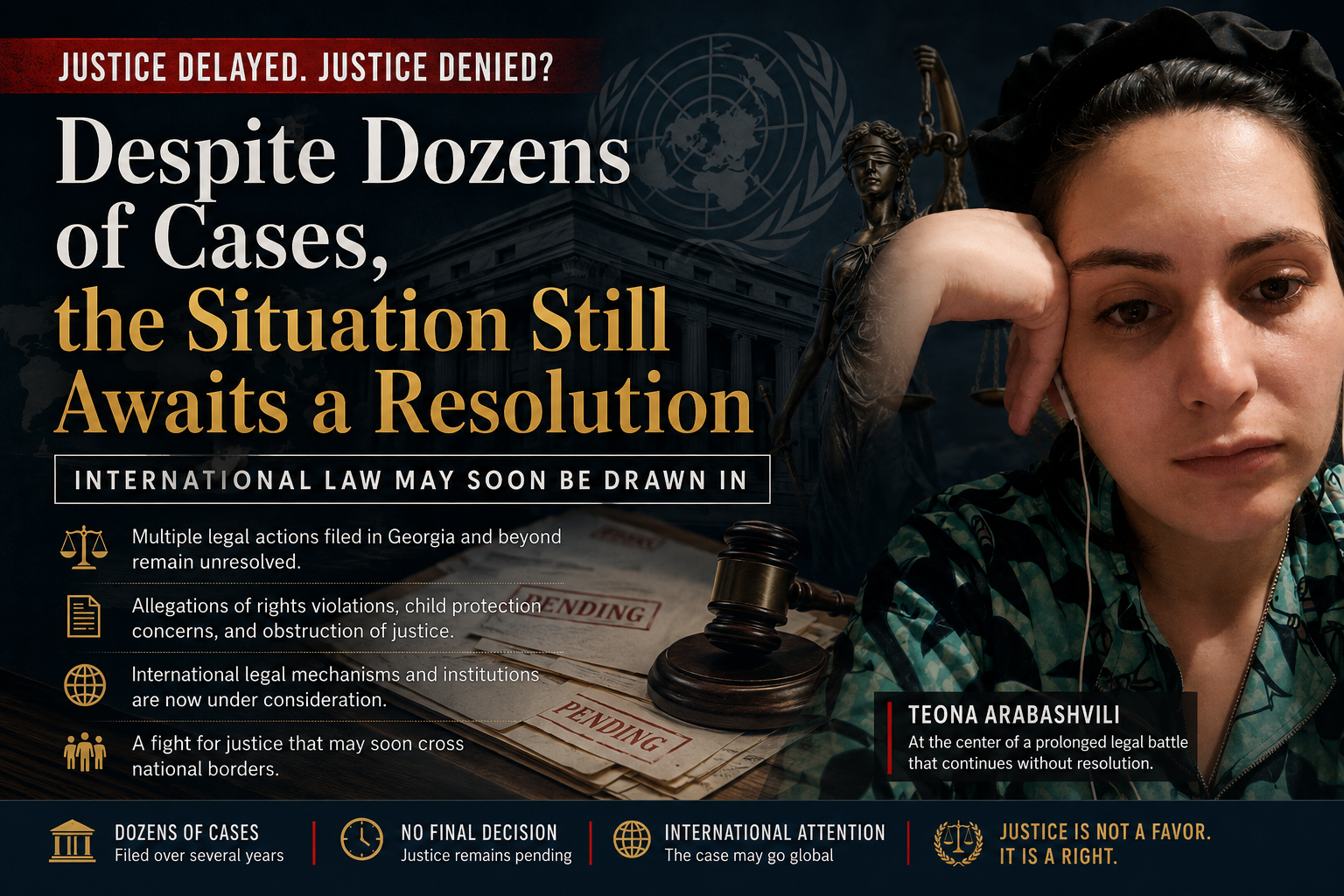
At what point does accumulated delay become its own injustice? That question increasingly hangs over a dispute that, according to the complainant, has generated numerous legal and administrative files while still leaving core issues unresolved. As the record grows, the debate is moving beyond the facts of one dispute and toward a broader examination of due process, institutional accountability and the boundaries of international legal scrutiny.
nn
nn
When legal volume begins to resemble legal paralysis
n
In ordinary circumstances, the existence of multiple cases can signal that a legal system is active. But there is a point at which volume may begin to suggest the opposite: not convergence toward a solution, but fragmentation, repetition and unresolved transfer of responsibility. That is the concern reflected in the file set reviewed by PRESS01.
n
The complainant’s central argument is not merely that many applications have been filed. It is that the number of proceedings itself reveals a structural problem. Complaints are said to have been addressed to different bodies, over different periods and under different procedural labels, yet the dispute’s most important questions remain unsettled. If that is accurate, then the issue becomes one of legal effectiveness rather than mere legal availability.
nn
Justice delayed, justice denied?
n
The phrase is rhetorical, but the underlying concern is concrete. In human-rights and rule-of-law analysis, prolonged proceedings can implicate fairness, access to remedy and the practical value of judicial protection. A right that exists only after excessive delay may, in some circumstances, cease to function as a meaningful right.
n
That is especially relevant where a dispute involves evidence that can degrade over time, property that may be moved or altered, financial losses that continue to accumulate and personal conflict that hardens with each passing month. Delay affects not only the calendar. It affects the quality of the eventual remedy.
n
Courts and authorities can legitimately require time. What they cannot do indefinitely is rely on the existence of procedure itself as proof of effectiveness. A system is tested not only by whether files are opened, but by whether they progress toward reasoned decisions that can be understood, reviewed and enforced.
nn
The international dimension is a legal threshold, not a slogan
n
Public discussion often uses the phrase “international law” loosely. In procedural terms, however, it has a specific meaning. International human-rights review is generally subsidiary, not primary. Domestic authorities must usually have a real opportunity to address the issue first. Final decisions, exhaustion of remedies, time limits and documentary proof remain critical.
n
That means an international route is not triggered automatically by the seriousness of the allegations or the number of unresolved files. It becomes relevant when domestic remedies have been used, have failed, or have proved ineffective in practice. It also becomes relevant when delay itself may amount to a separate issue requiring review.
n
In such situations, legal advisers usually ask a narrower series of questions: What exact public act or omission is challenged? Which right is said to be affected? Which domestic remedy was used? What final or de facto final decision exists? Was the applicant prevented from obtaining a remedy in practice? What documentary record proves these points?
nn
Why evidentiary discipline matters more than emotional certainty
n
One of the risks in long-running disputes is that a morally urgent story can outpace the structure of the evidence. That is understandable: people who believe they have been ignored often describe the situation in broad, compelling terms. But any legal escalation—especially to an international forum—demands disciplined proof, clean chronology and careful differentiation between allegation, record and decision.
n
For this reason, a professionally organised case file matters. It should not be a pile of disconnected complaints. It should be a matrix that groups the issues, records what evidence supports each issue, identifies the authority addressed and captures the outcome, if any. That matrix is often more valuable than the quantity of submissions.
nn
Property, institutional response and the burden of clarity
n
According to the complainant, one major branch of the dispute concerns property and museum-related material. Cases of this kind can become especially difficult because they sit at the intersection of ownership, custody, documentation and preservation. An object may have monetary value, scientific value, emotional value or all three at once. The relevant records may be dispersed. The chain of custody may be contested. Loss may be partial rather than total. Records may exist in multiple languages or in informal form.
n
These factors do not excuse uncertainty forever. They increase the need for clarity. Authorities must identify what they are examining, who has competence, what evidence is required and what remedy is legally available. Otherwise, a complex case risks becoming permanently procedural rather than substantively resolvable.
nn
A note of caution about private persons and public reporting
n
Because the matter is contested, public reporting must avoid turning an article into a substitute trial. A named person may appear in case materials without any court having established wrongdoing. The existence of allegations is not proof. At the same time, the absence of a final judgment does not eliminate the public-interest value of asking whether institutions are responding effectively.
n
Responsible reporting therefore requires precision and restraint. It must be possible to name the existence of a dispute, describe the legal concerns and invite response without collapsing the distinction between accusation and adjudication.
nn
The next stage may be less dramatic—but more decisive
n
The most important next steps are technical rather than theatrical: preserving originals, obtaining certified copies where possible, consolidating the chronology, identifying final and pending remedies, requesting reasons where no reasons have been given and mapping each issue against the legal route that is actually competent to resolve it.
n
If that work shows that effective domestic remedies remain available, they should be used. If it shows that remedies have been exhausted or have proved illusory, then international scrutiny may become more than a rhetorical possibility. But that conclusion should rest on documents, dates and decisions—not on frustration alone.
nn
A case that tests institutions as much as individuals
n
Whatever the eventual merits of the underlying dispute, the procedural story already raises a wider institutional question. When a matter produces numerous files but not a clear solution, is the legal system successfully processing complexity, or dispersing responsibility in a way that undermines confidence? That is a question with significance beyond any one dispute.
n
For that reason, the complainant’s case now sits at the meeting point of private grievance and public legal concern. The unresolved tension between file volume and final outcome is precisely what gives the matter its broader significance—and what may eventually determine whether international review becomes plausible.
nn
Named party and right of reply
n
The individual identified by the complainant in the underlying materials is Teona Arabahshvili. Her name appears here only as the identity of a party referred to in the supplied file materials. Its inclusion does not imply that PRESS01 has established guilt, wrongdoing or civil liability.
n
PRESS01 invites Teona Arabahshvili, any authorised legal representative, and the relevant public institutions to submit a documented response, correction or clarification for publication under the newspaper’s Editorial Policy and Right of Reply standards.
n
nn
Reference framework
n
- n
- European Court of Human Rights — Apply to the Court
- Practical Guide on Admissibility Criteria
- European Convention on Human Rights
n
n
n
n
nn
Editorial note: This article examines procedural delay, legal fragmentation and the possible future relevance of international mechanisms. It does not determine the outcome of any pending matter and should not be read as a court finding.
n